11/03/25
Redefining Success: National Leaders Turn to St. Louis for Solutions
Across the country, education leaders are seeking new ways to prepare high school graduates for college and career success. In St. Louis, The Opportunity Trust has spent five years building that answer through a three-part strategy: brokering partnerships between schools and employers through initiatives like Next Prep, incubating new models like BELIEVE Academy that embed industry-aligned career pathways, and advocating for policy changes that make career-connected learning the norm.
The result integrates academic rigor with real-world experience—equipping students with the knowledge, skills, and confidence to thrive. And increasingly, the nation is taking notice.
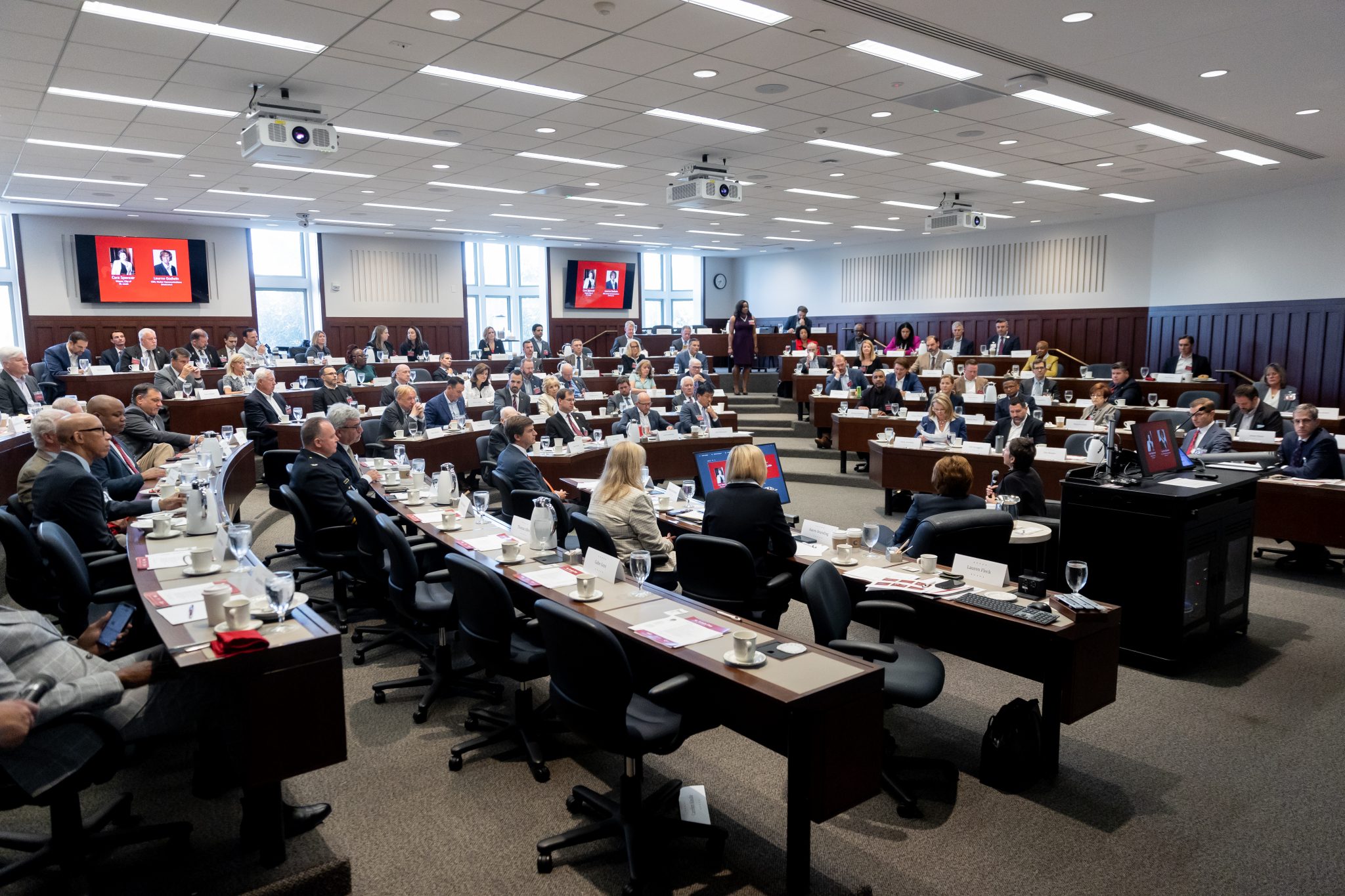
In recent months, delegations from states including Indiana, Louisiana, California, and Oklahoma have traveled to St. Louis to study The Opportunity Trust’s framework for aligning education with workforce needs. What began as local innovation is now becoming a national blueprint for systems change.

Brokering Connections: Next Prep as Infrastructure
The first prong builds the infrastructure for career-connected learning. Through Next Prep, The Opportunity Trust connects employers, training institutions, higher education, and high schools to create seamless pathways from classroom to career.
The need is urgent. Nearly 40% of students who enroll in college never finish, and over half of recent graduates are underemployed a decade later. In Missouri, 53% of jobs require more than a high school diploma but less than a four-year degree—yet fewer than 46% of workers hold the necessary credentials.
Next Prep closes that gap. Over four years, students pair rigorous academics with career exploration, skill development, and coaching. By junior and senior year, they specialize in high-demand fields—healthcare, skilled trades, or advanced manufacturing—earning dual credit and industry credentials while employers shape instruction around real workforce needs.
The results? Across three schools serving 950 students, 85% report clear career goals, 75% demonstrate proficiency in professional skills, and 60% of upperclassmen in trade pathways have earned at least one credential. Employers say 70% of participants are “workplace ready.”

Incubating New Models: BELIEVE Academy as Proof of Concept
The second prong shows what’s possible when career pathways are woven into high school from day one. Schools like BELIEVE Academy embed college preparation and career-connected learning aligned with industry demand, proving students don’t have to choose between rigor and relevance—they can have both.
When national delegations visited St. Louis this fall, they saw this integration in action: students tackling projects designed with employer input, working with industry mentors, and receiving one-on-one coaching to plan their futures. They observed a replicable model, one that existing schools can adapt and new schools can adopt from the start.
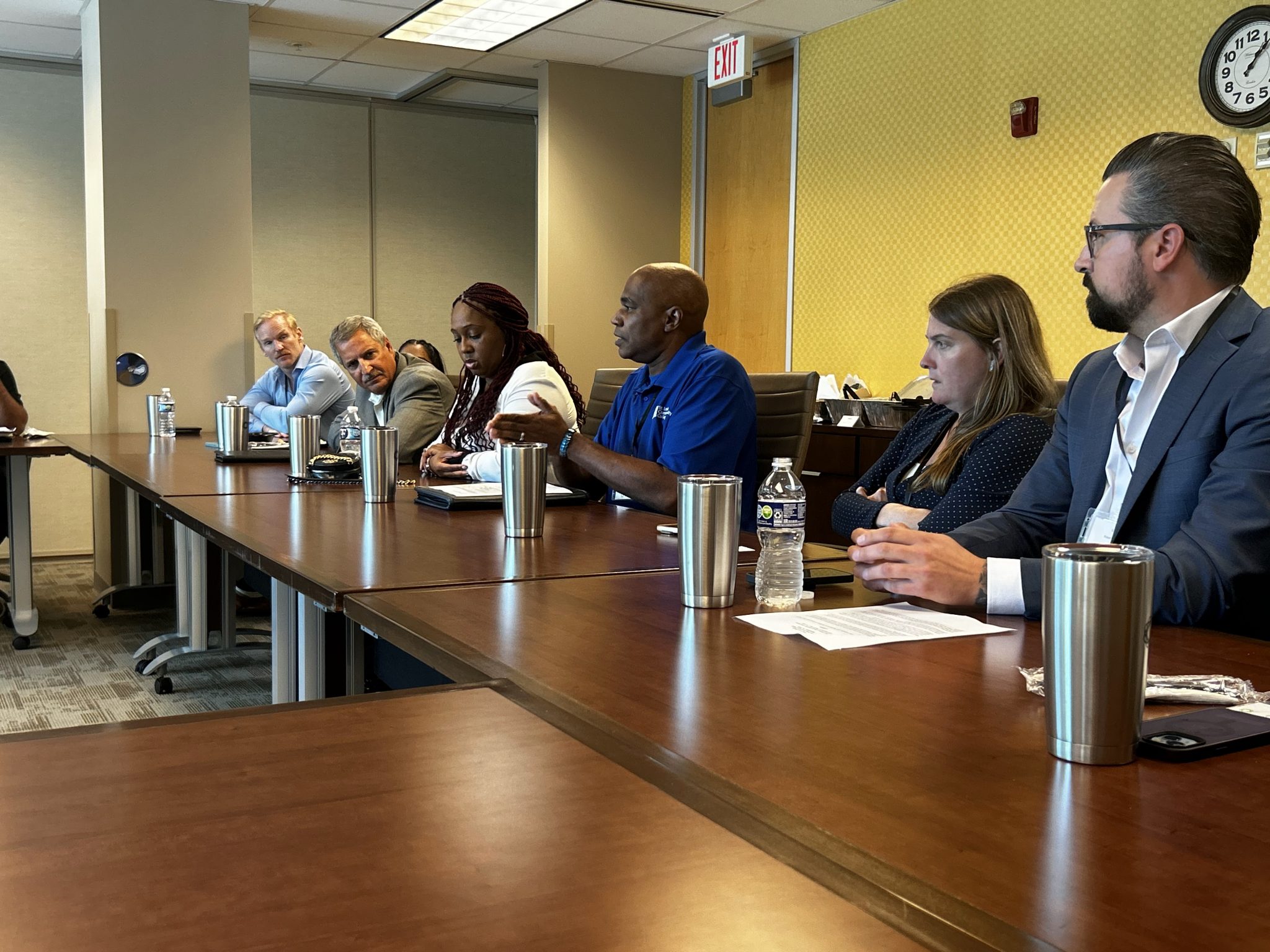
“I’m super impressed with the intentionality, the planning, and sort of the outcomes that are coming out of the work,” said Dr. Noemi Donoso, CEO of New Schools for Baton Rouge. “Particularly the student who already has a pharmaceutical certificate as a senior and has gotten security access at the hospital to do what she’s doing. For her, this is only one step in her future plans.”
Advocating for Policy Change: Making Quality the Norm
The third prong addresses systems-level barriers that limit access to career-connected learning. The Opportunity Trust advocates for policy and funding changes that incentivize quality models, modernize graduation requirements, and remove infrastructure barriers to opportunity.
This advocacy makes innovation scalable statewide. Visiting delegations study not only the programs but also the policy framework behind them—flexible graduation requirements, aligned CTE funding, and effective employer engagement.
“I think it’s really critical to break down the barriers between traditional high school and career pathways,” said Brent Bushey, CEO of Fuel OKC.

From Local Innovation to National Movement
The national interest in The Opportunity Trust’s work signals that this approach matters far beyond St. Louis. As leaders nationwide seek ways to prepare students for tomorrow’s jobs, they’re finding a model that works today—one proving that high school can be both rigorous and relevant, and that readiness must begin before graduation.
By operating as intermediary, incubator, and advocate simultaneously, The Opportunity Trust demonstrates that systems change requires action on multiple levels. When states adopt this framework, they’re not just improving schools—they’re transforming how entire regions connect education to economic opportunity.
Learn more about our approach at theopportunitytrust.org
Innovative Next Prep Initiative Expands to Second School and City
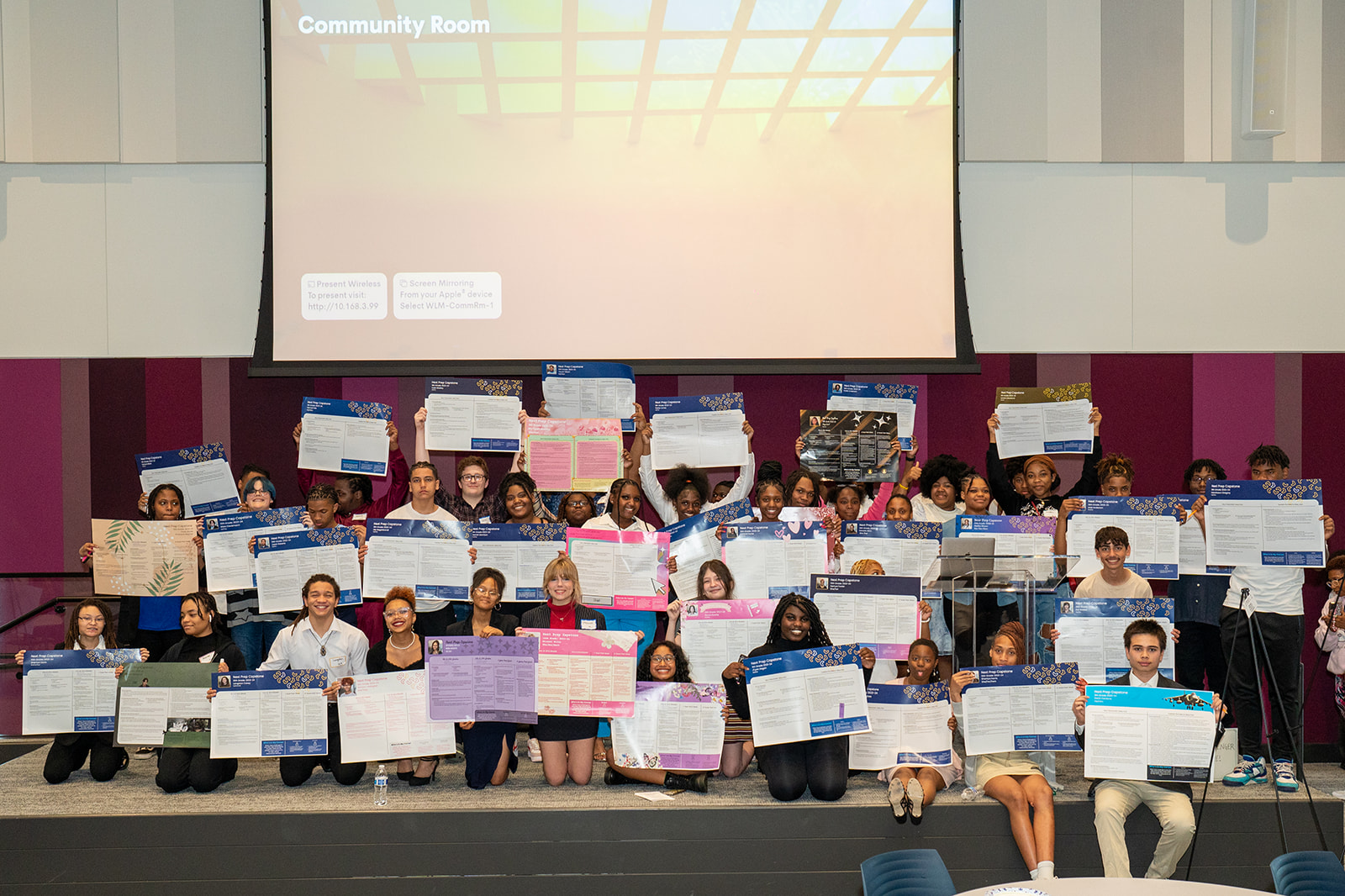
This spring, 525 students from St. Louis and Indianapolis completed Next Prep, exploring careers through capstone projects and employer partnerships. Next year, the program expands to serve 700 students.