04/21/26
Increasing Transparency: Why Missouri’s New School Report Cards Matter More Than Ever
The Opportunity Trust (OT) has worked for years to help build the conditions for this kind of systemic change—supporting leadership development, strengthening governance, advancing research-proven strategies, and convening civic and policy leaders around shared data. Now, Missouri is entering a pivotal phase in its effort to strengthen public education outcomes. For years, the state’s accountability framework has conveyed success even as student performance trends signaled the need for deeper reform. Today, a growing alignment among the governor’s office, State Board of Education, and legislative leaders suggests momentum toward a more honest and transparent approach to measuring school performance. In his 2026 State of the State address, Governor Mike Kehoe announced an executive order directing the development of an A–F grading system for schools and districts, with legislation under consideration to ensure its long-term durability.
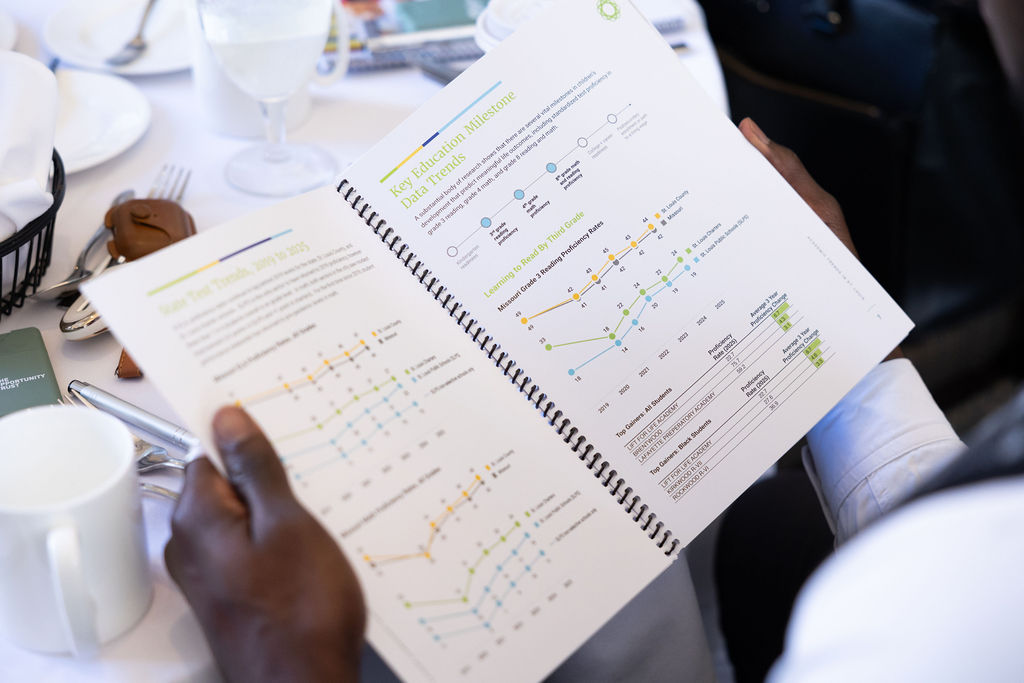
This moment reflects more than a technical policy shift. It is a step-change with the potential to accelerate progress across Missouri because it creates the conditions for more honest conversations about how students are actually doing. Missouri now ranks in the lower third of states in fourth-grade reading on the National Assessment of Educational Progress, and statewide proficiency rates remain below pre-pandemic levels, yet more than 90 percent of schools continue to be labeled as “meeting expectations” under the current accountability framework. That disconnect between labels and learning has made it harder for families, educators, and policymakers to identify where improvement is needed and where progress is truly occurring. Clearer school report cards could change that by making student outcomes more visible, aligning resources and support more effectively, and helping accelerate progress for students across the state.
Greater Transparency Through A-F School Report Cards
An A–F reporting system aims to translate complex accountability measures into accessible indicators that families (and educators and policymakers) can quickly understand. When implemented thoughtfully, transparent reporting can help focus attention on what’s working and what’s not, highlight effective instructional practices, and ensure that resources are directed toward strategies that produce measurable gains.
Many states are showing that clearer performance reporting can help accelerate improvement when it is paired with stronger instruction and sustained support for schools. States that use more transparent accountability systems have often paired them with long-term investments in high-quality literacy and math instruction, educator training, and school-level support. Many of those states have seen stronger gains in national assessments and faster post-pandemic recovery than Missouri. Their experience suggests that transparency matters not because it changes outcomes on its own, but because it creates the conditions for more honest conversations, better-targeted support, and sustained action around what students need to succeed.
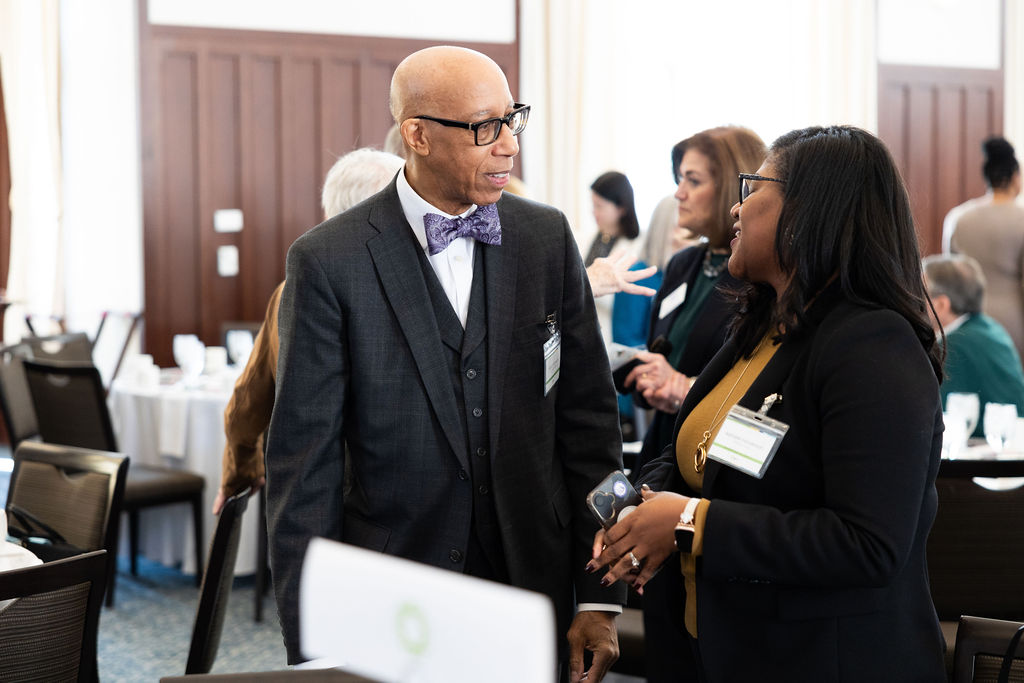
OT’s work across Missouri reflects this integrated approach. By convening leaders across sectors and supporting reforms that strengthen governance and instructional quality, OT has helped advance a strategy focused on accountability and measurable outcomes. In St. Louis, collaborative efforts among educators, civic leaders, and philanthropic partners at OT’s recent data education town hall have shown how transparent data can inform more strategic decision-making and accelerate improvement across schools – something St. Louis parents want as well. Statewide adoption of clearer report cards would extend this work, creating a shared framework for accountability that supports continuous progress.
“Transparent accountability systems help ensure that the focus remains on student learning and long-term improvement,” said Eric Scroggins, Founder and CEO of The Opportunity Trust. “When families, educators, and policymakers share a common understanding of performance, it becomes possible to align resources and accelerate progress at scale.”
As OT’s Board Chair, Keith Williamson, recently noted, honest school report cards can play a critical role in rebuilding public confidence by aligning expectations with outcomes.

Missouri and the States Leading the Way
For philanthropic investors, Missouri’s move toward clearer school performance reporting represents an important opportunity to strengthen the impact of long-term investments in education. Over the past several years, philanthropy has helped build the infrastructure necessary for reform—from leadership pipelines and innovative school models to literacy initiatives that support early learning. Transparent report cards can enhance the return on these investments by making progress visible and ensuring that resources are directed toward strategies that produce results.
Clear school report cards will not solve every challenge facing Missouri’s students, but they provide a critical foundation for informed decision-making and sustained improvement. By aligning policy with data transparency and strategic investment, Missouri has the opportunity to accelerate progress and build a stronger education system for the future.
Data Driven: What Missouri Can Learn From Fast-Improving States